Bayline Pros of Mill Valley brand markBayline ProsSub-Zero · Mill Valley

Technical · displays, alarms, safe code reading

Sub-Zero Error Codes & Alarms in Mill Valley

An alarm on a panel-ready built-in in Belvedere often arrives at the worst moment, and the first instinct — to pull the unit out and poke around — runs straight into the built-in cabinet removal/reseat risk. Custom millwork does not forgive a rushed yank. The safer first move is to read the code correctly, because half of these alarms are telling you about airflow or a sensor, not a catastrophe.

A very common example: a code or alarm that traces back to a condenser coil packed with dust or pet hair, which made the cabinet run hot until the control flagged it. What the code cannot tell you by itself — and why a universal online chart is misleading — is the exact meaning for your model. The same two characters can mean different things across Sub-Zero lines, so we verify against your serial before acting.

Quick answer

Sub-Zero error and alarm codes are model-specific and must be read against your serial number, not a generic chart. Many alarms point to airflow, a sensor or a door left open — not a major failure. We interpret the code, confirm it on-site, and never replace a board on a guessed meaning.

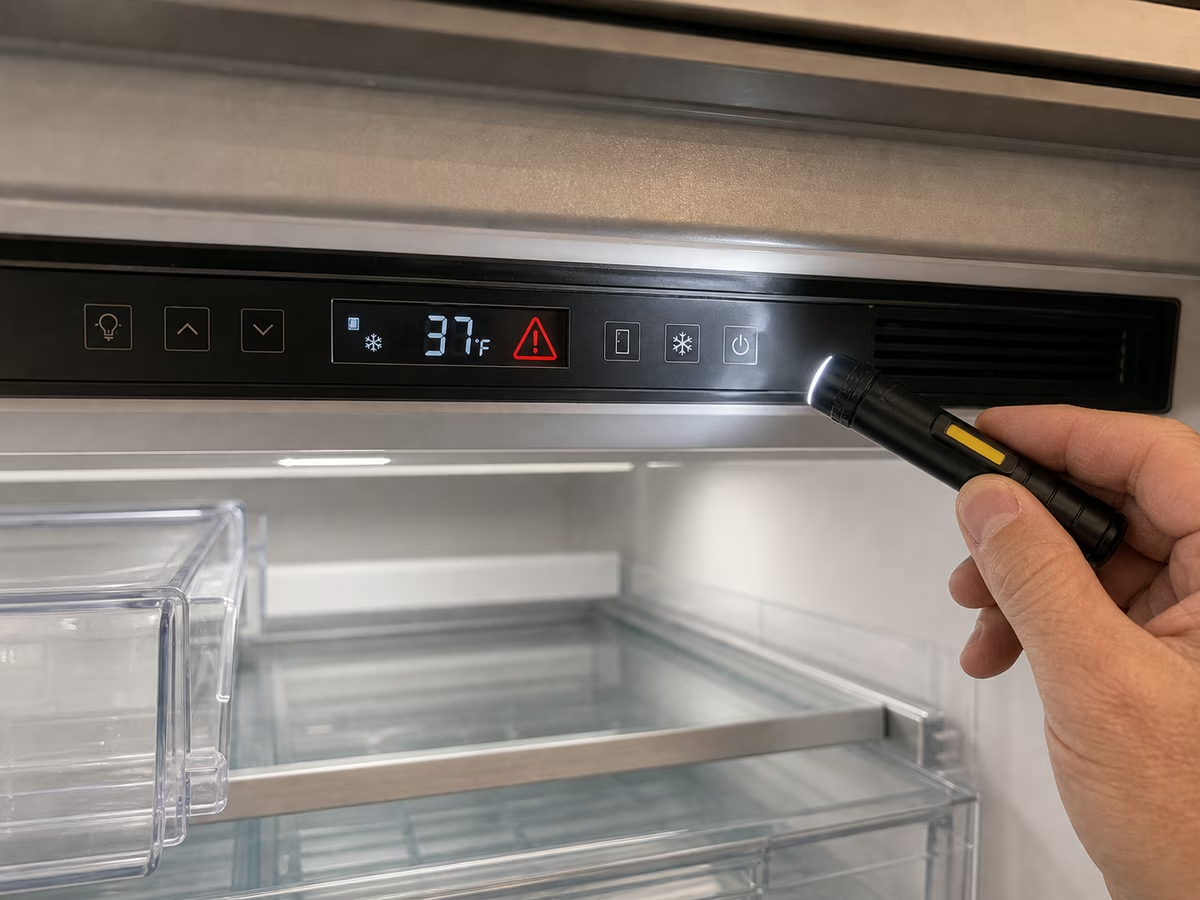
Sub-Zero control display showing an alarm indicator during diagnosis
SERVICE IMAGESub-Zero control display showing an alarm indicator during diagnosis
sub-zero-display-alarm-millvalley.avif
DIAGNOSISThe display is a starting point. We read the code against the serial before we act on it.

Safe to check vs. leave to a technician. Safe for an owner: note the exact code or alarm pattern, confirm the door is fully closed and sealed, check that the condenser is not blocked, and power-cycle once if the manual allows. Leave to a technician: any code pointing to the sealed system, compressor, high-voltage components or a control board. Do not clear and ignore a recurring alarm — it will come back, usually at a worse time.

Evidence column

What we record for an alarm

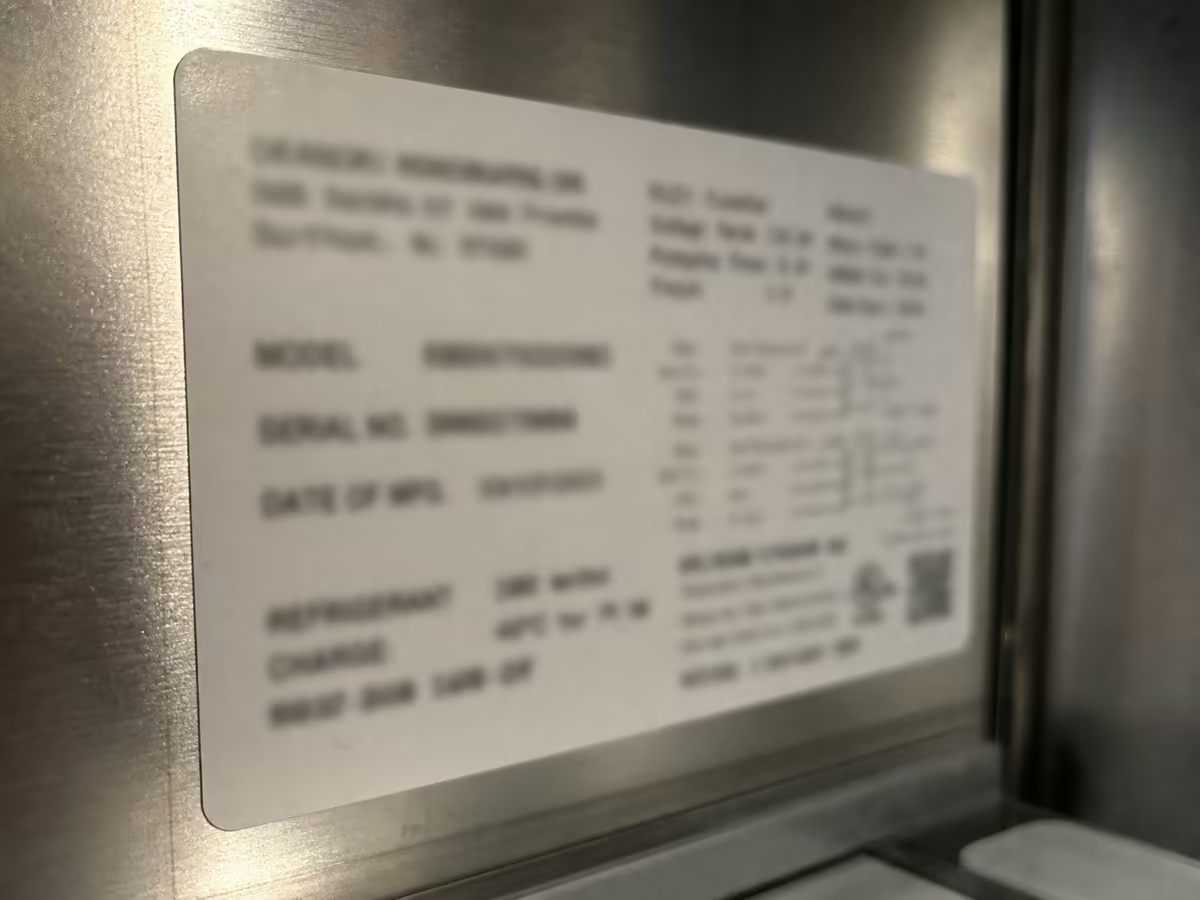
Sub-Zero model and serial tag photographed to interpret an alarm code
SERVICE IMAGESub-Zero model and serial tag photographed to interpret an alarm code
sub-zero-model-tag-codes.avif
MODELModel-tag proof: the code only means something once tied to this serial.
Probe testing a Sub-Zero control board to verify an alarm before replacement
SERVICE IMAGEProbe testing a Sub-Zero control board to verify an alarm before replacement
sub-zero-board-test-probe.avif
TESTProbe test: we confirm the board or sensor before any part is ordered.

Service explanation

How we respond, in order

An alarm is data, not a diagnosis. We start by reading the code against the serial, then confirm the physical cause — a door switch, a thermistor, airflow, or a genuine board fault. A door-gasket leak, condensation or frost line can itself trip temperature alarms by letting humid air in, so we check the seal as part of the workup. Only once the cause is confirmed do we name a part, and we document it the same way every time: temperature readings, condenser/evaporator photos, the model-tag image, and the OEM gasket or control-board evidence.

In the 94941 canyons, damp air and dust load mean temperature and defrost alarms skew toward airflow causes — worth checking before assuming electronics.

Alarm categories (verify by model/serial)

What a class of alarm usually points to

These are categories, not exact codes. Exact code meanings differ by Sub-Zero line and must be verified against your serial — a universal online chart will not match your unit.

Alarm category — likely meaning, test, false positive, path
Alarm typeLikely meaningConfirmation testFalse positive to avoidRepair path
Temperature / high-tempAirflow, defrost or doorCompartment readings + door checkAssuming refrigerant lossAirflow / defrost / seal
Door / ajar alarmSwitch or alignmentDoor switch + alignment testReplacing a board for a switchSwitch or door adjust
Sensor / thermistorOut-of-range sensorProbe vs. sensor readingCondemning the boardOEM thermistor
Defrost faultHeater or thermostatDefrost circuit testCalling it a sealed leakDefrost component
Condenser / run-timeDirty coil, hot cabinetCoil inspectionPremature compressor workCondenser clean / fan
Control / communicationBoard or wiringBoard diagnostics by serialGuessing the code meaningVerified board repair
Ice maker alarmWater side or moduleFill volume + module testBlaming cooling systemInlet valve / module

Mill Valley price ranges

Sub-Zero error code & alarm repair price ranges in Mill Valley

Mill Valley ranges for Sub-Zero error codes and alarms. The same code means different things across Sub-Zero lines, so it is read against your serial before any part is quoted.

Sub-Zero error code & alarm repair price ranges in Mill Valley
Service / symptomWhat is includedPrice rangeTime on site
Diagnostic + serial-matched code readRead the code against your serial and confirm the cause on-site$165–$24545–90 min
Door switch / ajar sensorSwitch test, replacement and alignment check$190–$4201 hr
Thermistor / temperature sensorSensor test and OEM replacement$280–$5601–2 hr
Control / display board (serial-matched)Board diagnosis and serial-matched replacement$430–$1,1801–3 hr
Defrost circuit (heater / thermostat)Defrost-circuit test and component replacement$340–$6801–3 hr

What sets the final price: whether the alarm is a switch, a sensor, a defrost fault or a genuine board; and the Sub-Zero line and board revision.

Step by step

How to respond to a Sub-Zero error code or alarm in Mill Valley

These steps keep an alarm from turning into a needless board replacement before we read it against your serial.

  1. Write down the exact code or pattern. Note the precise characters or the alarm flash pattern; the same letters mean different things across Sub-Zero lines.
  2. Check whether the unit is warming. A high-temp alarm with a warming cabinet means move perishables and call; a cleared alarm that returns should be diagnosed.
  3. Look for the simple causes. A door left ajar, a tripped door switch or a dirty condenser triggers many board-looking alarms before any board is at fault.
  4. Do not trust a universal code chart. Online charts mix model lines; the code only means something read against your serial number.
  5. Send the code, model and serial. That lets us tell you whether it is an owner-safe check or a visit, and pre-stock the right sensor or board.

Fast facts

Sub-Zero error-code facts for Mill Valley

  • Sub-Zero error codes are model-specific: the same characters mean different things across lines, so a universal online chart is misleading and the code must be read against your serial.
  • Most Sub-Zero alarms trace to airflow, a door switch, a thermistor or a door left ajar — not a failed control board.
  • Typical Mill Valley alarm-related repair range: $190–$1,180, from a door switch or sensor to a serial-matched control board.
  • A recurring high-temp alarm in a damp Mill Valley kitchen often clears with a $245 condenser-and-switch fix rather than the new board owners expect.

Reviews

What Mill Valley Sub-Zero owners say

★★★★★

“Recurring high-temp alarm on our 736 in Blithedale Canyon. They read the code against the serial — airflow, not a board. A condenser clean and door-switch fix for $245, and the alarm stopped.”

— Janet K., Blithedale Canyon 94941
★★★★★

“A flashing alarm I was sure meant a new control board. It was a $310 thermistor reporting wrong, diagnosed against the serial in Homestead Valley. No needless board swap.”

— Paul A., Homestead Valley 94941
★★★★★

“Display error after a defrost fault in Mill Valley. Heater and thermostat replaced for $420 — again, no expensive board.”

— Marcus L., Mill Valley 94941

A recent alarm call

Cascade Canyon — recurring high-temp alarm

AIRFLOW
Problem
High-temp alarm clearing then returning every few days.
Diagnosis
Condenser packed with dust; cabinet running hot and tripping the alarm.
Repair
Condenser clean and fan check; no board replaced.
Verification
Temperatures stable over a full cycle; alarm did not return.

Got a code or alarm? Have the model number ready.

Read us the alarm and the model number. We’ll tell you whether it’s an owner-safe check or a visit, and we’ll never quote a board on a guessed code.

Questions, answered for Mill Valley

Frequently asked

Do Sub-Zero error codes mean the same thing on every model?

No. The same characters can mean different things across Sub-Zero lines, which is why a universal online chart is misleading. We read the code against your serial number before acting on it.

Does an alarm mean I need a new control board?

Usually not. Many alarms point to airflow, a door switch, a thermistor or a door left ajar. We confirm the physical cause before any board is replaced — a faulty sensor often triggers a board-looking alarm.

Is it safe to keep using the unit with an alarm?

It depends on the alarm. A high-temp alarm with warming means move perishables and call; a cleared alarm that keeps returning should be diagnosed rather than ignored, because it will come back.

What should I tell you about the code?

The exact characters or alarm pattern, the model and serial number, and whether the unit is warming. That lets us tell you whether it is an owner-safe check or a visit before we drive out.

My Sub-Zero high-temp alarm keeps returning — do I need a new board?

Usually not. In Mill Valley a recurring high-temp alarm often traces to a dust- or salt-clogged condenser or a door switch; a $190–$420 fix clears it far more often than a $430–$1,180 control board.

Can I keep using the unit while the alarm is on?

It depends. A high-temp alarm with a warming cabinet means move perishables and call; a benign alarm that clears can wait for a scheduled window. Send the exact code and your serial so we can tell you which.

Call (415) 683-1487Book online