
Wine storage · 6 min read
Why a Sub-Zero wine column drifts warm in Mill Valley
A Sub-Zero wine storage unit that can't hold a steady cellar temperature is almost always a fixable fault. What goes wrong with dual-zone wine columns in Mill Valley, and when it's worth repairing.
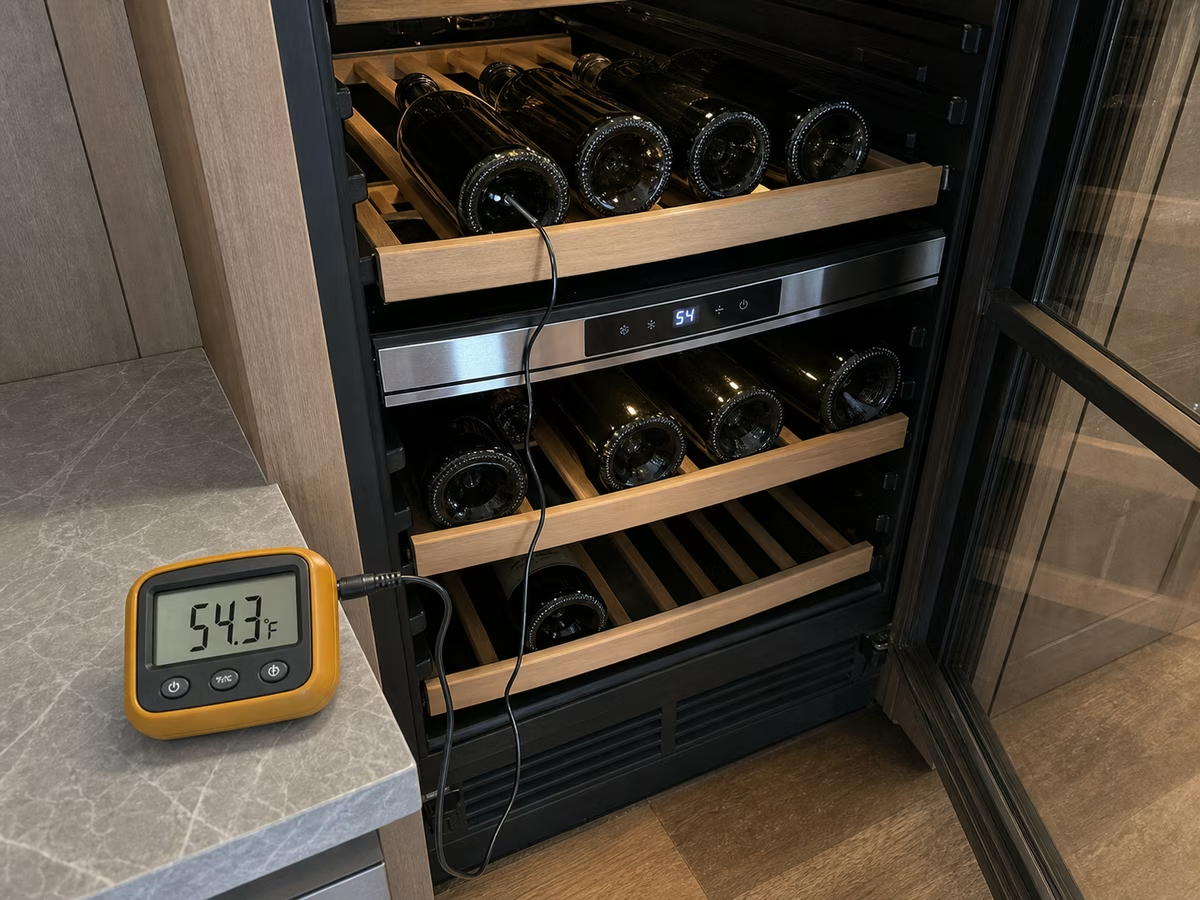
A wine collection in Mill Valley is rarely an afterthought. With Napa and Sonoma a half-hour over the hill, a built-in Sub-Zero wine column in a Cascade Canyon remodel or an Old Mill hillside home is often holding bottles that matter — and that makes a one- or two-degree drift feel like an emergency rather than an inconvenience.
The good news: Sub-Zero builds its wine storage on the same sealed-system engineering as its refrigeration, and when a wine unit stops holding temperature, the cause is almost always a discrete, repairable fault rather than a dead appliance. Here is what actually goes wrong, and what we look at first.
Dual zones, and the sensor that holds them apart
The reason collectors choose a Sub-Zero wine column is the dual-zone control: reds held in the mid-fifties up top, whites and sparkling colder below, each zone managed independently. That independence depends on a separate thermistor reading each compartment and a control board cycling cooling to match. When one zone drifts — typically the upper zone creeping warm while the lower still holds — the most common culprit isn't the compressor at all but a single failing zone sensor feeding the board a bad reading.
That distinction matters because it changes the repair completely. A drifting thermistor is a bounded, OEM part swap; we confirm it by reading both zones against an independent probe before touching anything. A genuinely struggling sealed system is a different conversation, and we don't guess between the two.
The sealed system, airflow, and the Mill Valley wrinkle
A wine column cools the same way the refrigerator does — a compressor and refrigerant moving heat out through a condenser coil — and it shares the refrigerator's biggest local weakness. Mill Valley's redwood-shaded lots and the damp marine air that pushes off Richardson Bay load a condenser with fine dust and grit faster than a dry inland kitchen does. A loaded coil makes the compressor run longer and warmer, and a wine unit tuned to hold a tight cellar band is less forgiving of that than a fridge is. A warm drift that arrived gradually over a season is very often nothing more exotic than a dirty condenser and a tired evaporator fan.
The other quiet failures are at the door. Sub-Zero wine units use a UV-treated glass door and a perimeter gasket to keep ambient light and warm room air off the bottles; in a foggy, humid Mill Valley kitchen a gasket that no longer pulls flush lets the cabinet sweat and the upper zone wander. We check the seal, the glass, and the hinge alignment as part of any warm-drift diagnosis.
Vibration, sediment, and the repair-versus-replace call
One thing wine owners notice that fridge owners never do: vibration. A compressor mount that has loosened or a fan working harder against a dirty coil transmits a low hum into the cabinet, and constant micro-vibration disturbs the sediment in older reds — exactly what a wine column exists to prevent. If your bottles are humming, that's a real symptom, not a quirk, and it usually traces back to the same coil-and-fan story above.
On whether to fix it: a Sub-Zero wine unit is built to run fifteen to twenty years, so a sensor, a fan, a gasket or a board is almost always worth repairing. The only case where we'll show you the math and sometimes advise replacing is an older unit facing a refrigerant leak or a failing compressor — and even then we put the gauge readings in front of you rather than asking you to take it on faith. Every visit starts with the $89 diagnostic, credited toward the repair, and the work carries our 365-day warranty on parts and labor. We're an independent Sub-Zero specialist, not a factory dispatcher, so you're booking the technician who actually does the job — by phone or online.
FAQ
Questions & answers
My upper zone is warm but the bottom still feels cold — what does that mean?
That split is the classic sign of a single failing zone sensor rather than a failed compressor. The board is getting a bad reading from one thermistor while the rest of the system works. We confirm it with an independent probe in each zone before recommending a part.
Is it normal for my wine cabinet to hum or vibrate?
A faint hum is normal; a vibration you can feel in the bottles is not. It usually points to a loose compressor mount or a fan straining against a loaded condenser, and it's worth addressing because vibration disturbs sediment in aging reds.
Does Sub-Zero really make wine storage, or is that a different brand?
Sub-Zero builds dedicated wine storage as part of its built-in refrigeration line — dual-zone columns and undercounter units on the same sealed-system engineering. It's fully on-brand, and we service it alongside Sub-Zero refrigerators.
Guides
More Mill Valley guides
- Undercounter units · 4 min Why a Mill Valley Sub-Zero Undercounter Unit Runs Warm Why a Mill Valley Sub-Zero beverage center, undercounter fridge, or drawer unit runs warm: choked grille, iced coil, clogged drain, worn seal, plus fix cost. Read the guide →
- Door Gasket and Condensation · 7 min Sub-Zero Door Not Sealing or Fogging Up in Mill Valley's Fog Belt? Sub-Zero door fogging, sweating, or not sealing in Mill Valley's fog belt? We diagnose tired gaskets, sagging doors, and clogged drains. Independent repair. Read the guide →
- Seasonal guide · 6 min A Mill Valley seasonal calendar for your built-in Sub-Zero When the redwood shade lifts, when the summer fog rolls off Richardson Bay, and when wildfire smoke arrives — a season-by-season maintenance plan for a built-in Sub-Zero in Mill Valley. Read the guide →
Rather leave it to a specialist?